The rewilding library: 17 books to read to rewild yourself
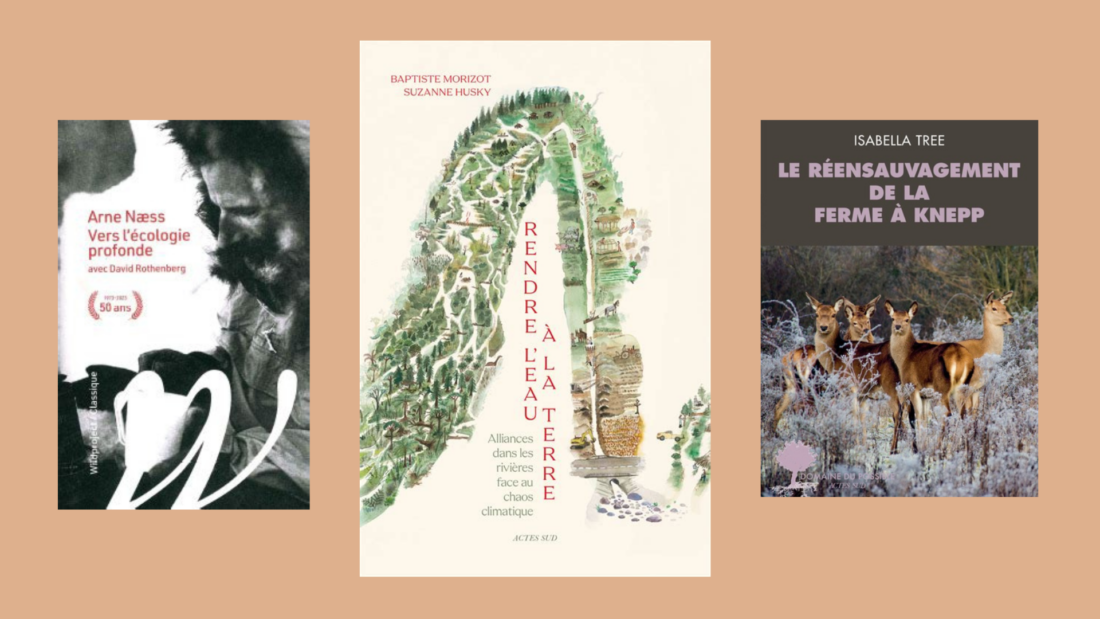
When our rewilding adventure began in 2016, there wasn’t much literature on the subject, even less so in French. Fortunately, today there are enough quality books to build a small library. Whether you are a fan of essays, novels, comics or even children’s books, we have put together a selection of books to immerse you in the multitude of vibrant stories about the rewilding of the natural world.

1. Raviver les braises du vivant (Reviving the Embers of Life) by Baptiste Morizot
Actes Sud / WildProject, 2020
In Raviver les braises du vivant, Baptiste Morizot offers a profound reflection on the relationship between humans and nature. As a philosopher and naturalist, he invites us to rethink the way we interact with the living world. Baptiste Morizot calls for an ethic of ‘care’ based on interdependence rather than exploitation. He draws inspiration from the behaviour of wolves to illustrate how humans could regain their place as guardians of life, rather than mere dominators. This book encourages us to rekindle our ecological awareness and renew our alliances with other forms of life in order to restore our lost harmony with nature.
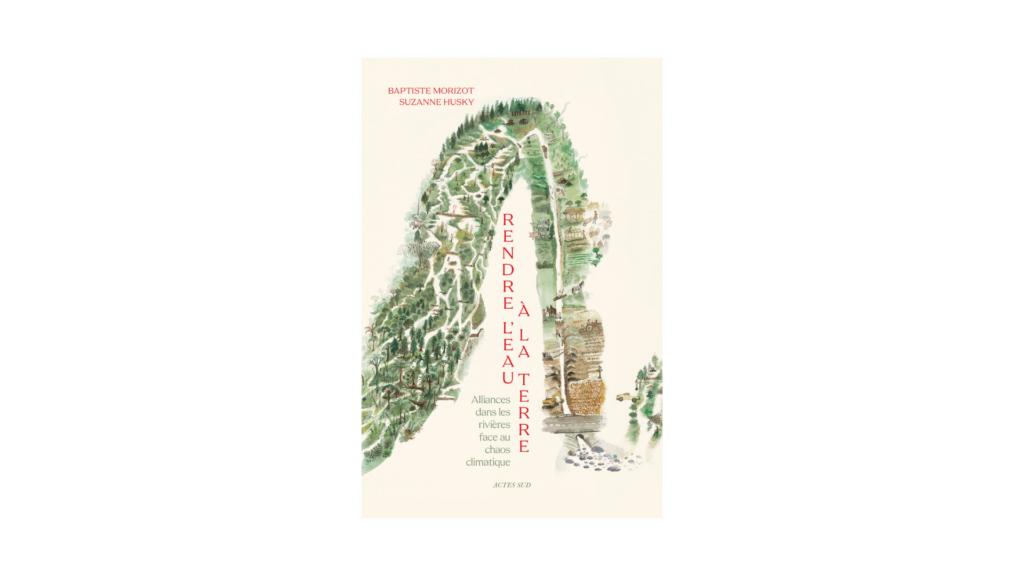
2. Rendre l’eau à la Terre (Returning Water to the Earth) by Baptiste Morizot and Suzanne Husky
Actes Sud 2024
Rivers, which are essential for biodiversity, have been damaged by urbanisation and intensive agriculture, limiting their ability to regulate the effects of climate change. To remedy this, it is crucial to restore the water balance of the soil. In this extraordinary book, Baptiste Morizot explores a new way to heal rivers by drawing inspiration from beavers, animals that have played a key role in hydrating environments for millions of years. Through their activity, beavers create ecosystems that are resilient to droughts and floods. What if low-tech techniques inspired by beavers were the future of regenerative hydrology?
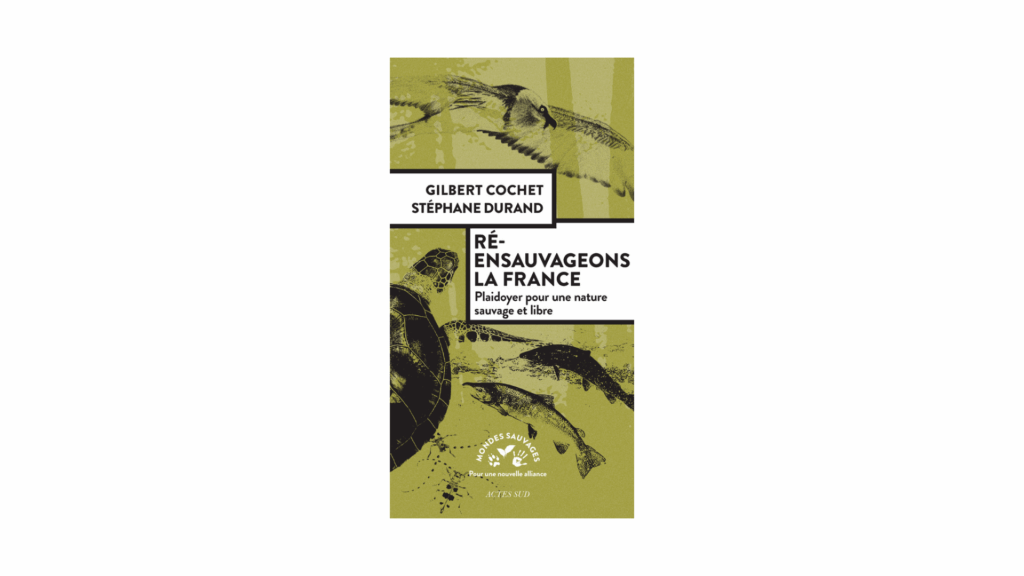
3. Ré-ensauvageons la France (Let’s Re-wild France) by Gilbert Cochet and Stéphane Durand
Actes Sud, 2018
In Réensauvager la France, Gilbert Cochet advocates giving nature back its freedom by limiting human intervention. He defends the concept of ‘rewilding’, which consists of allowing ecosystems to regenerate on their own and reintroducing key species, such as large predators (bears, wolves, lynxes). Gilbert Cochet draws on examples of success in France and Europe, such as the return of vultures and bison, demonstrating the ecological and economic benefits. The book calls for a rethinking of our relationship with nature to enable a sustainable balance between human activities and biodiversity.
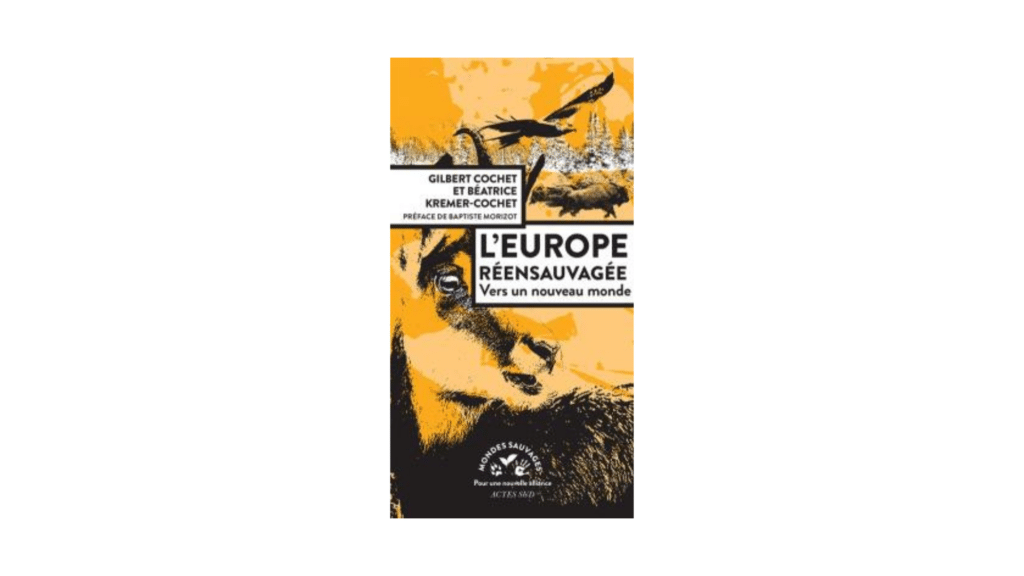
4. L’Europe réensauvagée (Europe Re-wilded) by Gilbert Cochet and Béatrice Kremer-Cochet
Actes Sud, 2020
L’Europe réensauvagée by Gilbert and Béatrice Cochet presents an ambitious project to restore natural ecosystems in Europe by promoting the reintroduction of large animals and the regeneration of wild environments. The authors highlight concrete examples of areas where iconic species such as wolves, bison and lynx have already made a comeback, showing that biodiversity can be restored if given the space to do so. This book promotes an optimistic ecological vision, where humans can coexist with wilder environments, offering solutions to mitigate the environmental crisis. They also propose a transformation of agricultural and forestry practices to enable this ecological transition.

5. For a Primary Forest in Western Europe by Francis Hallé
Actes Sud, 2021
In A Primary Forest in Western Europe, botanist Francis Hallé explains why it is essential to recreate the conditions that would allow a primary forest to return to Europe, free from human intervention. He describes the characteristics required, namely a vast area of at least 70,000 hectares left to regenerate naturally, allowing biodiversity to recover over centuries. This project aims to restore an ecological balance, which is essential in the face of the climate crisis, while questioning our relationship with forests.

6. A Life on Our Planet by David Attenborough
Flammarion, 2021
In A Life on Our Planet, David Attenborough traces the evolution of biodiversity and the planet throughout his lifetime, while denouncing the current environmental crisis. He highlights the destructive impact of human activities on ecosystems, biodiversity loss and climate change. Through his observations, he reminds us that the damage inflicted on nature is not irreversible, provided we act quickly.

7. Book of Hope bu Jane Goodall
Flammarion, 2021
Jane Goodall’s The Book of Hope is an inspiring plea for the preservation of the planet and the regeneration of biodiversity. Through her stories and observations, she emphasises the urgency of protecting nature, while remaining deeply optimistic in the face of ecological challenges. Her vision of rewilding is based on the restoration of damaged ecosystems, allowing extinct species to regain their place in nature. Goodall highlights the interconnectedness of all living beings and the importance of restoring these balances to ensure the survival of humanity. She advocates concrete actions, such as reforestation and species reintroduction, and emphasises individual and collective commitment to changing the current trajectory. Beyond the prevailing pessimism, she conveys a message of hope based on the resilience of nature and humanity’s ability to repair its mistakes.

8. Towards the Deep Ecology of Arne Naess
WildProject, 2017
Arne Næss, Norwegian philosopher and founder of deep ecology, does not directly use the term ‘rewilding’ in his writings. The concept of rewilding, which refers to the process of restoring ecosystems to their natural state, emerged later in ecological discussions, although some of his ideas can be seen as compatible with this concept.
However, it is important to note that the principles of deep ecology proposed by Næss are very close to the spirit of rewilding. These principles emphasise the interconnectedness of all life forms and the need for humans to respect the intrinsic value of ecosystems and species. Deep ecology encourages a fundamental change in the way humanity perceives nature, advocating for reduced human intervention and greater harmony with natural processes. In this way, Næss’s ideas can be seen as a philosophical basis for practices such as rewilding, even if he does not explicitly mention it.
Rewilding is now an ecological movement that aims to restore degraded natural areas by limiting human influence, reintroducing key species and allowing ecosystems to regenerate on their own. Although this concept postdates Næss’s work, his vision of nature as having intrinsic value, regardless of its usefulness to humans, resonates with the idea of rewilding.
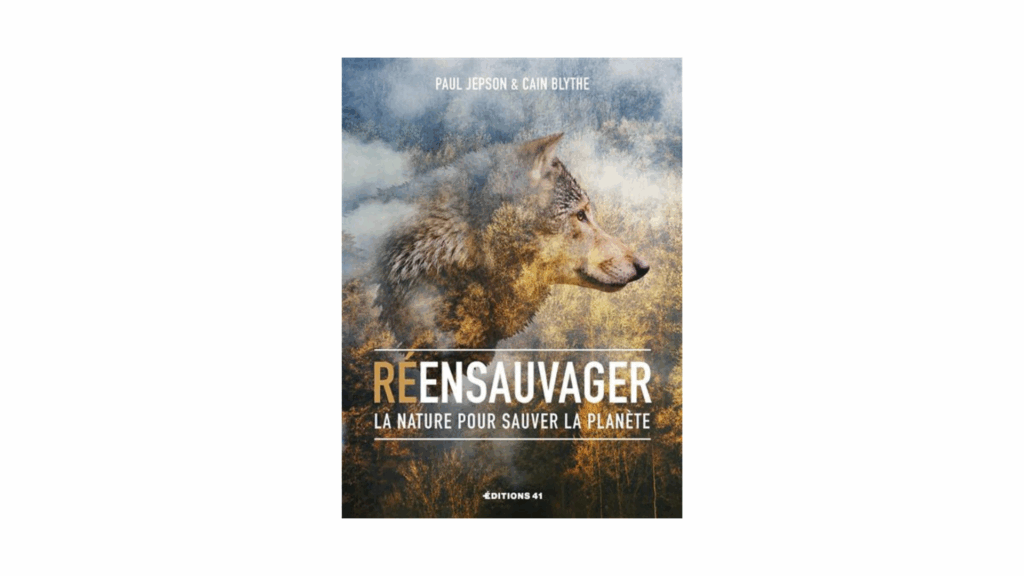
9. Rewilding the Planet by Paul Jepson and Cain Blythe
Editions 41, 2022
Rewilding the Planet by Paul Jepson and Cain Blythe explores the importance of rewilding as an essential strategy for restoring degraded ecosystems and combating the environmental crisis. The authors argue that rewilding, which involves reintroducing species and restoring natural habitats, can contribute to the resilience of ecosystems in the face of climate change. They present concrete examples of successful rewilding projects, illustrating how these initiatives promote biodiversity and restore ecosystem services.
The book also addresses the challenges associated with rewilding, including ethical, economic and political issues. Jepson and Blythe emphasise the importance of local community involvement and international collaboration for the success of these projects. Ultimately, they call for a paradigm shift in our relationship with nature, aiming to restore a harmonious balance between humans and their environment.
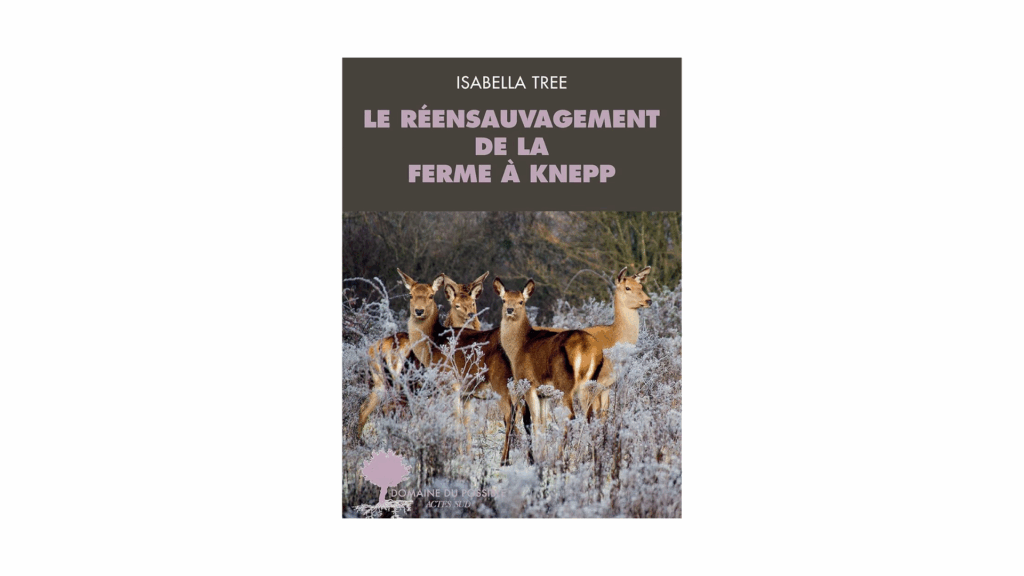
10. The Re-wilding of Knepp Farm by Isabella Tree
Actes Sud, 2022
The Re-wilding of Knepp Farm by Isabella Tree tells the story of Knepp Farm in Sussex, England, where owners Isabella Tree and Charles Burrell decided to abandon traditional farming in favour of a rewilding model. In 2000, they abandoned intensive farming practices and let nature take its course, allowing ecosystems to regenerate.
Tree describes how this approach has promoted biodiversity, with the return of long-lost species of flora and fauna, such as deer, rare birds and pollinating insects. Using techniques such as wild animal grazing and wetland management, the farm has become a model of sustainability and ecology.
The book also addresses the challenges encountered during this transition, including farmers’ reluctance and prejudices towards rewilding. Isabella Tree emphasises the importance of redefining our relationship with nature by placing conservation at the heart of agricultural practices. Ultimately, Rewilding at Knepp Farm shows how a bold and innovative approach can revitalise agricultural land while preserving the environment, offering an inspiring vision for the future of agriculture and conservation.

11. The Monkey Wrench Gang by Edward Abbey
Gallmeister, 2016
Edward Abbey’s The Monkey Wrench Gang is a vibrant call for rewilding and rebellion against the destruction of nature. Four radical environmentalists – a disillusioned surgeon, a passionate activist, an angry veteran and an eccentric Mormon – join forces to sabotage the infrastructure that disfigures the American desert. Their goal? To return the land to itself, dismantling the dams, roads and machines that suffocate the wilderness. Rewilding becomes their credo, rejecting the domestication of nature and industrial exploitation. Their spectacular actions, bordering on anarchy, are part of a desperate but passionate struggle to restore the wild freedom of the land. Abbey’s dark humour makes this novel an exhilarating manifesto for a return to authentic and untamed nature.
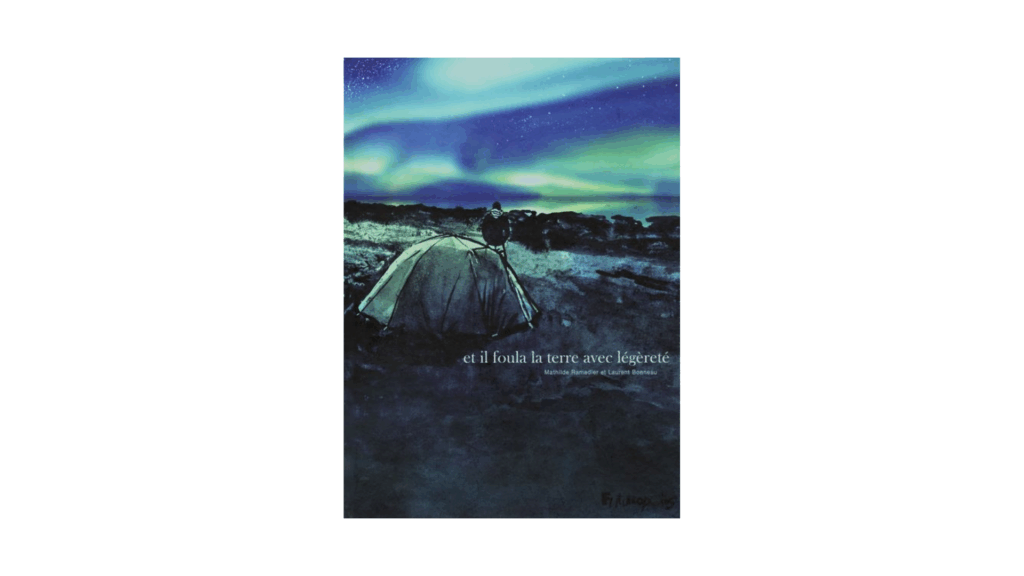
12. Et il foula la terre avec légèreté (And He Trod the Earth Lightly) by Mathilde Ramadier
Futuropolis, 2017
Ethan, a young engineer specialising in drilling for a multinational oil company, is offered a job in the Lofoten Islands, in northern Norway, where an oil field has reportedly been discovered and a new platform is being planned. He leaves Paris for an initial acclimatisation mission in the Arctic Circle, where he meets geophysicists already working there. However, his immersion in the local community leads him to reflect on the dangers associated with such a project. This journey, imbued with poetry and contemplation, is inspired by the philosophy of Arne Naess (1912-2009), founder of deep ecology. This movement, which is very influential in Scandinavia, opposes a ‘superficial’ view of ecology, which aims only to improve human comfort without fundamentally rethinking man’s place in nature.
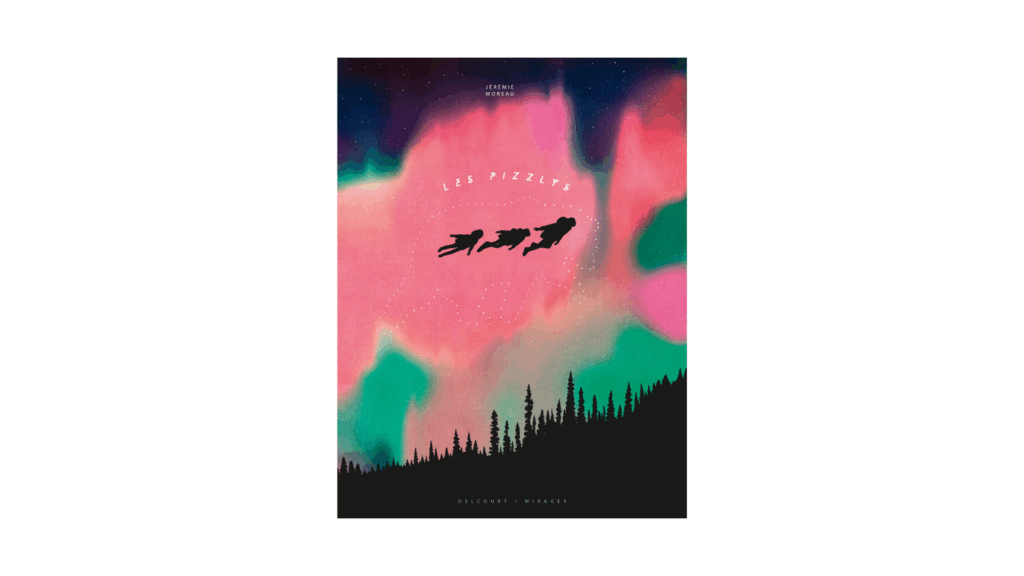
13. Les Pizzlys by Jérémie Moreau
Delcourt, 2022
Les Pizzlys** by Jérémie Moreau is a comic book that tells the story of Nathan, a young Parisian driver overwhelmed by routine and family responsibilities. His life is turned upside down when he travels to Alaska with his two young siblings following an unlikely encounter. Far from the city, they discover the majesty and harshness of nature, as well as the effects of global warming, symbolised by pizzlys, hybrid bears born from the crossbreeding of grizzlies and polar bears. This journey of discovery questions our relationship with nature, the ecological crisis and the need to give meaning back to our lives in an increasingly dehumanised world. Graphically, Moreau combines poetry and power, with watercolours that evoke both the fragility and grandeur of the wild world.
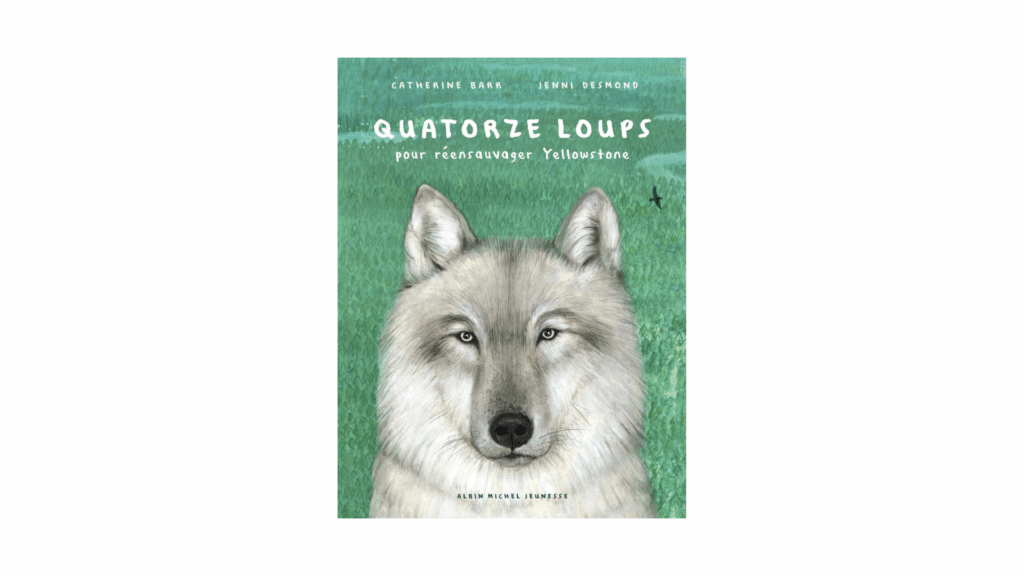
14. Fourteen Wolves to Reintroduce to Yellowstone
Albin Michel Jeunesse, 2021
Fourteen Wolves to Reintroduce to Yellowstone is a children’s book that tells the captivating story of the return of wolves to Yellowstone National Park. Wolves had once disappeared, causing major problems for other animals and plants. Without wolves to hunt them, deer ate too many plants, disrupting the entire ecosystem. In 1995, fourteen wolves were reintroduced to the park, and little by little, nature began to recover. Plants grew back, other animals such as beavers and birds returned, and everything came back into balance. This book shows children how a small group of wolves helped save a large park and all its wildlife!

15. Feral by George Monbiot
Penguin Books 2014
Feral by George Monbiot explores the idea of “rewilding”, i.e. restoring ecosystems by giving them the freedom to regenerate naturally. Monbiot recounts his own desire to reconnect with the wild after feeling alienated by modern life. He denounces intensive agriculture and land exploitation, which he considers to be the main causes of environmental degradation. The author argues that reintroducing extinct species (such as wolves and beavers) could revitalise landscapes and restore ecological processes. He uses historical and contemporary examples to show how nature quickly reclaims its rights when left undisturbed. This book combines ecological commitment with a personal call for a deep reconnection with nature, inviting us to rethink our relationship with it.
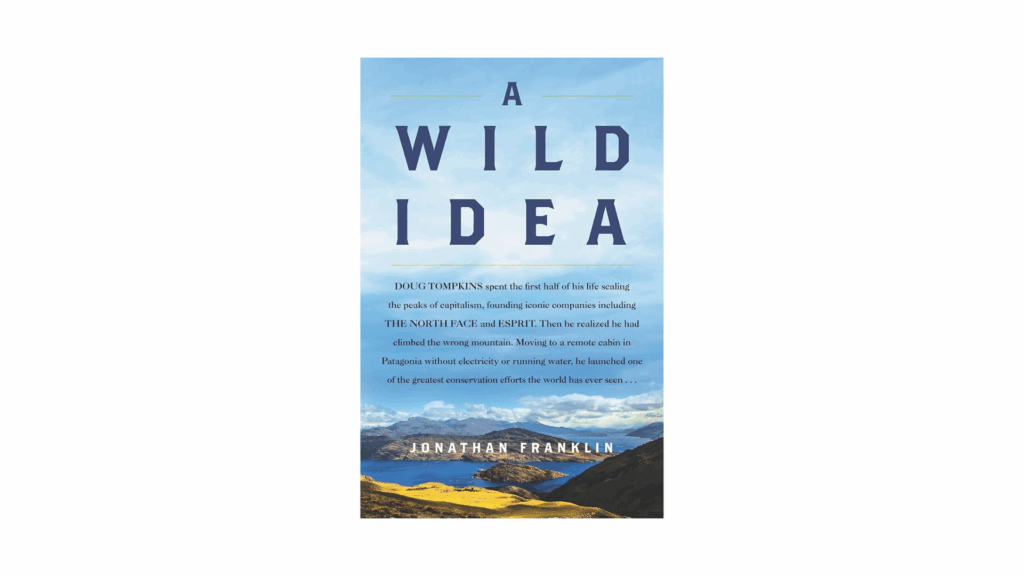
16. A Wild Idea by Jonathan Franklin
HarperOne 2021
A Wild Idea by Jonathan Franklin tells the fascinating story of Doug Tompkins, founder of The North Face and Esprit, who gave up his life in business to devote himself to environmental protection. Tompkins used his fortune to buy millions of hectares of land in Patagonia, Chile and Argentina, with the aim of creating national parks and preserving biodiversity. The book traces his journey, his personal challenges, his political battles and the complex relationships he had to maintain with local governments. Franklin highlights Tompkins’ determination to save nature, despite criticism and obstacles.
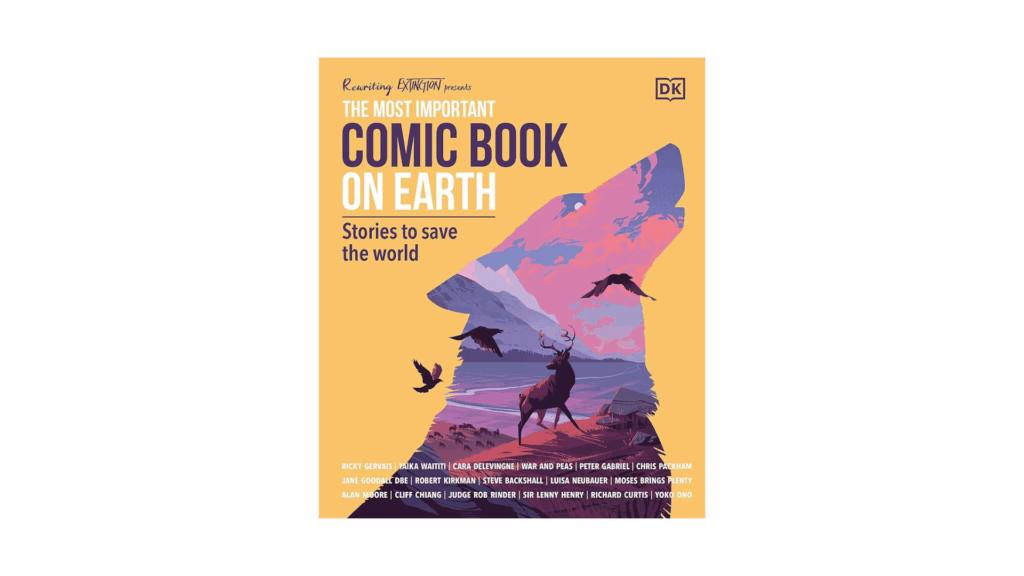
17. The Most Important Comic Book on Earth
Penguin Random House 2021
The Most Important Comic Book on Earth: Stories to Save the World is a comic book anthology published in 2021 by Paul Goodenough, bringing together more than 300 artists, writers and celebrities to raise awareness of the climate crisis. This book aims to inspire action to save the planet through a series of varied stories addressing themes such as biodiversity loss, pollution and climate justice.
Contributors such as Greta Thunberg and Jane Goodall bring an international and committed dimension to the project. In partnership with Rewriting Extinction, the book offers concrete calls to action to help protect endangered species and combat climate change.
If you have any other references to suggest, please feel free to send us an email at contact@intotherewild.org.
Happy reading!
Text by Arnaud Hiltzer
Scientific advisors: Alexandra Locquet and Jonathan Mille